Shirt Ideas
Aloha Shirt vs Hawaiian Shirt: History, Fabrics & Rules
What is the difference in aloha shirt vs Hawaiian shirt? Learn the 1930s Honolulu origins, common fabrics, cultural etiquette, and how custom prints work.
By Personalized Hawaiian Shirts · · 7 min read
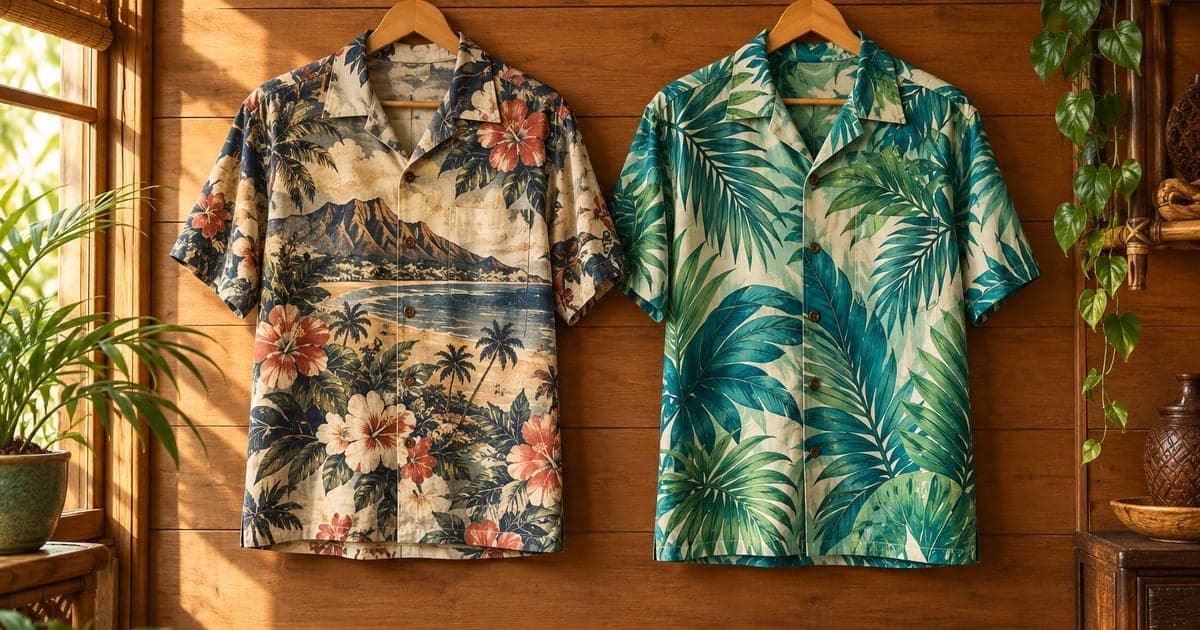
Short answer: In the aloha shirt vs Hawaiian shirt comparison, both terms refer to the same collared, short-sleeved, button-down printed shirt that originated in Honolulu in the 1930s, but they reflect different perspectives. Residents of Hawaii call the garment an aloha shirt and wear it as everyday and business attire, while people on the U.S. mainland usually call it a Hawaiian shirt and associate it with vacations, weekends, and lively group events. Understanding where the shirt came from, how it is made, and how it is worn helps you pick the right style for any occasion.
What is an aloha shirt, and how does it differ from a “Hawaiian shirt”?
If you ask what is an aloha shirt, the structural definition is straightforward: it is a collared, buttoned dress shirt, almost always short-sleeved, cut with a straight bottom hem so it can be worn untucked in warm weather, often with a left chest pocket sewn so the printed pattern stays continuous. In the Hawaiian language, it is also referred to as palaka aloha.
While the cut of the garment is the same, people in Hawaii and people on the mainland often use the two names to describe slightly different styling traditions:
| Feature | How “Aloha shirt” is used in Hawaii | How “Hawaiian shirt” is used on the mainland |
|---|---|---|
| 1. Who uses the term | Local residents (kamaʻāina) and Hawaii-based clothiers | Mainland shoppers, tourists, and vacationers |
| 2. Where it is worn | Office business attire, Aloha Friday, weddings, funerals, and even courtrooms (depending on the judge) | Vacations, cruises, summer barbecues, backyard luaus, and themed Fridays |
| 3. Traditional vs. contemporary print style | Often features traditional Hawaiian quilt designs, tapa (kapa) patterns, or muted florals, including “reverse print” shirts printed on the inside so the outside color is softer | Often features bright, high-contrast tropical florals, palm trees, surfboards, drinks, or custom personalized prints |
| 4. How it is styled | Worn untucked (or tucked in for formal business settings) with slacks or chinos as “aloha attire” | Worn buttoned up or open over a t-shirt with shorts, chinos, or jeans |
What is the origin of Hawaiian shirts?
The origin of Hawaiian shirts is not a single-culture story; the garment grew directly out of Hawaii’s multi-ethnic plantation and merchant communities in the 1920s and early 1930s, blending Japanese, Chinese, Filipino, Native Hawaiian, and Western influences.
Historical accounts trace the earliest shirts to two Honolulu storefronts in the early 1930s:
- Musa-Shiya the Shirtmaker: Located in Honolulu under the proprietorship of Kōichirō Miyamoto, Musa-Shiya began tailoring shirts out of colorful Japanese kimono and kasuri prints in the late 1920s and early 1930s. The exact phrase “aloha shirt” first appeared in print in an advertisement for Musa-Shiya in The Honolulu Advertiser on June 28, 1935.
- Ellery Chun and King-Smith Clothiers: In Waikiki, Chinese-American merchant Ellery Chun began selling ready-to-wear printed shirts off the rack at his family’s store, King-Smith Clothiers and Dry Goods, in the early 1930s. His company registered “Aloha Sportswear” as a trademark in 1936 and “Aloha Shirt” in 1937, holding the rights for twenty years. Wikipedia notes that crediting Chun alone with inventing the shirt is a popular myth; Musa-Shiya was selling them earlier.
- Filipino styling influence: The habit of wearing the shirt with a straight hem hanging out rather than tucked into trousers was influenced by local Filipino workers, who wore untucked shirts called bayau.
By 1936, labels such as Kamehameha and Branfleet (which later became Kahala) were founded, and by the end of the 1930s the local industry employed 450 people and generated $600,000 a year. After World War II, returning U.S. service members brought the shirts home to the mainland. In the post-war era, Honolulu manufacturers like Alfred Shaheen (founded in 1948, whose red aloha shirt Elvis Presley wore on the 1961 Blue Hawaii album cover), Tori Richard (founded in Honolulu in 1956 by Mort Feldman, Janice Moody, and pattern maker Mitsue Aka), and Spooner’s of Waikiki (founded in 1956, precursor to Reyn Spooner) helped turn aloha wear into an international resort staple.
Inside Hawaii, the Honolulu Chamber of Commerce and the Hawaiian Fashion Guild pushed for the shirts to be accepted at work, first during the Aloha Week festival launched in 1947, then through the Guild’s 1962 “Operation Liberation” campaign in the state legislature, and finally with the official launch of Aloha Friday in 1966.
What are Hawaiian shirts made of?
When shoppers ask what are Hawaiian shirts made of, they are usually comparing how different fabrics drape, breathe, and hold up in the wash. Across the history of aloha wear, makers have relied on four main fabric categories:
| Fabric type | How it feels and drapes | Pros | Care considerations |
|---|---|---|---|
| 1. Rayon (filament or spun) | Lightweight, cool to the touch, with a fluid, silky drape that moves in the breeze | Takes vibrant dye colors sharply; classic vintage 1940s and 1950s feel | Can shrink or wrinkle if washed in hot water; many vintage rayon shirts require gentle care |
| 2. Cotton (lawn, sateen, or poplin) | Crisp, breathable, and slightly more structured than rayon | Durable, natural fiber; used in classic Hawaiian cotton lawns and reverse-print shirts | Holds its shape well over years of washing; benefits from a quick press or steam |
| 3. Silk | Ultra-smooth with a natural luster and very light weight | Used in early 1930s kimono-fabric shirts and high-end resort lines | Delicate; usually requires dry cleaning or careful hand washing |
| 4. Polyester & Cotton-Poly Blends | Smooth, lightweight, and wrinkle-resistant | Holds high-resolution all-over prints without fading; packs in a suitcase without creasing; easy machine wash | Less absorbent than pure cotton, so lightweight weaves work best in summer |
Are Hawaiian shirts offensive, or can anyone wear one?
Searches for are Hawaiian shirts offensive have become more common as travelers and office organizers want to make sure they are being respectful of Native Hawaiian and Pacific Islander culture. Looking at the history of the garment gives a clear, balanced perspective:
- A multicultural commercial garment, not sacred regalia: As documented in the history of the aloha shirt, the garment was not a pre-contact religious or ceremonial item restricted to chiefs or priests. It was created in 1930s Honolulu by Japanese and Chinese tailors drawing on Filipino and Western shirtmaking specifically to be sold to both locals and visitors.
- Welcomed in Hawaii when worn with respect: In Hawaii, aloha attire is the standard dress code for business, celebrations, and visitors alike. Local businesses, hotels, and cultural venues actively encourage guests to wear aloha shirts.
- Where context matters: When irritation does come up around mainland “Hawaiian shirt” themes, it is rarely about the shirt itself. Instead, it happens when people pair a shirt with mocking caricatures (like fake grass skirts or plastic props) that treat living island cultures as a joke, or when sacred Polynesian imagery is used disrespectfully. Wearing a well-made shirt as genuine summer, resort, or celebratory clothing, without turning island culture into a caricature, is widely accepted everywhere.
When to choose classic floral prints vs. personalized Hawaiian shirts
Both styles have their place in a wardrobe:
- Choose a classic floral or tonal aloha shirt when you are attending a formal Hawaii wedding, a business dinner in Honolulu, or a quiet resort evening where you want a traditional island print.
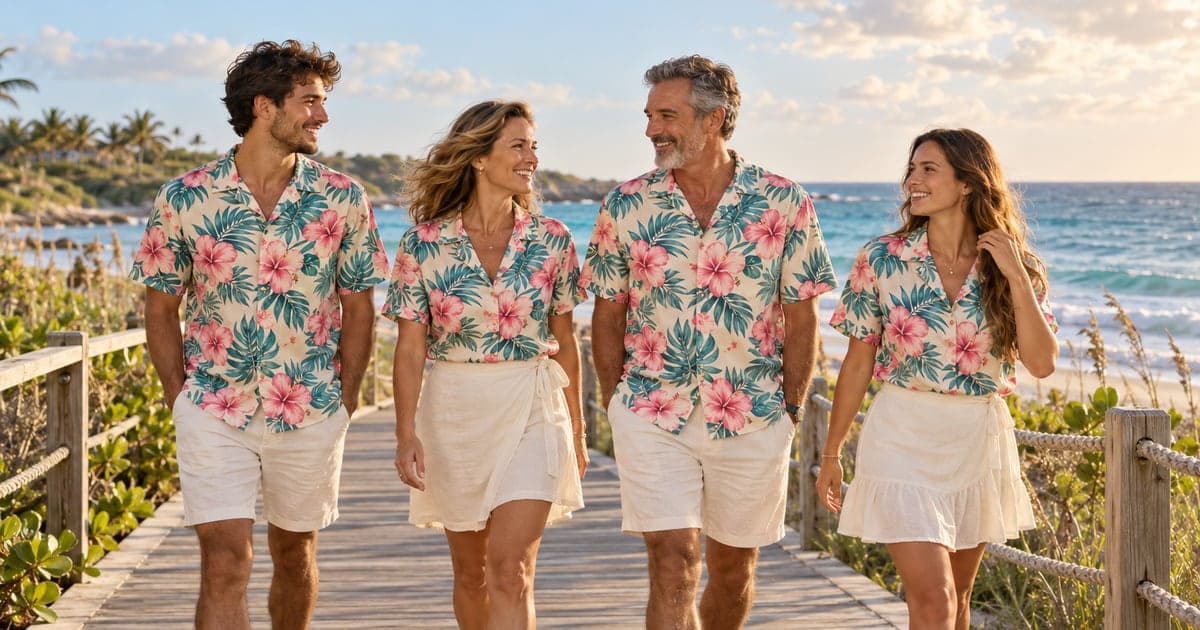
- Choose personalized Hawaiian shirts, such as our custom face shirts, when the goal is celebrating a specific person, family, or team: a 40th birthday trip, a family reunion, a family cruise, a bachelor party, a pet lover’s gift, or a company picnic where a custom logo in the pattern brings the group together.
Custom options, sizing, and group pricing on our shirts
If you are ordering custom shirts for yourself or a group on our site, here are the exact details you can count on:
- Three custom print styles: Print one face across all shirts, put each person’s own face on their individual shirt, or place a logo into the tropical pattern.
- Collar and pocket options at no extra cost: Pick a flat camp collar or a traditional point collar, with or without a chest pocket, and mix those styles freely within the same design at no extra charge.
- Live print preview before paying: Upload a JPG, PNG, or WebP file up to 8 MB on the design page. Background removal is automatic and free, and you see the live preview on the site before you pay.
- Sizes S to 6XL at the same price: There is no minimum order quantity, and every size from S to 6XL costs the exact same price within your quantity tier.
| Quantity | Price per shirt | How pricing works | Estimated delivery to your door |
|---|---|---|---|
| 1 to 10 shirts | $39.90 | Standard site price | Around 3 weeks |
| 11 to 24 shirts | $35.90 | Written group quote | Around 3 weeks |
| 25 to 49 shirts | $33.90 | Written group quote | Around 3 weeks (up to 40 shirts); 4 to 5 weeks (41+ shirts) |
| 50+ shirts | $31.90 | Written group quote | 4 to 5 weeks (up to 200 shirts) |
Group pricing for 11 or more shirts is provided through a written quote (replied to within 1 business day) rather than applied automatically at checkout. Shipping is free on orders from $99. Delivery takes about 3 weeks for up to 40 shirts, 4 to 5 weeks for 41 to 200 shirts, and longer during November and December.
Ready to design your own shirt? Browse our shop and custom face shirts, test a photo on the live print preview, or visit our bulk orders page to request a written group quote.