The fit guide
Find your
size
with a shirt
you own
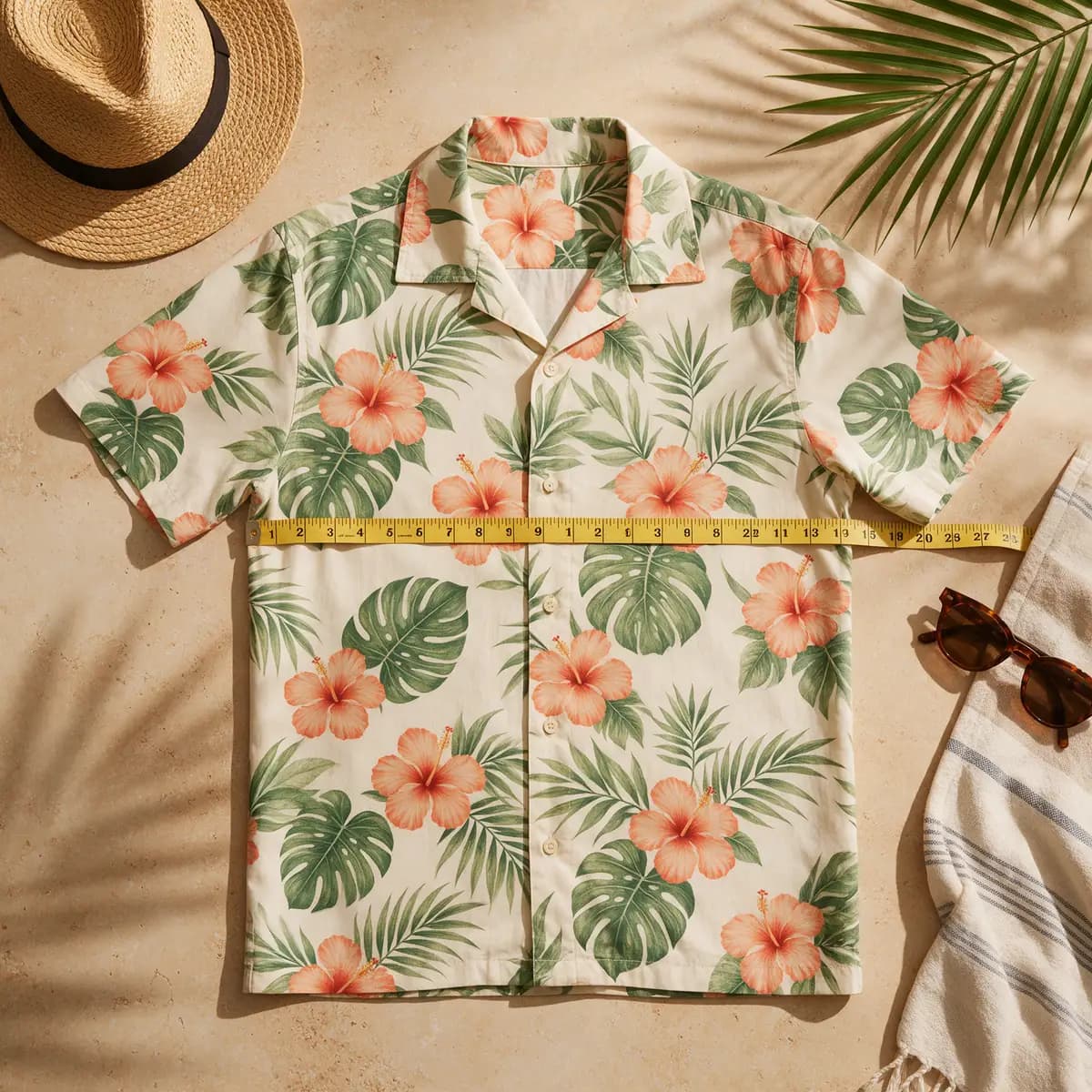
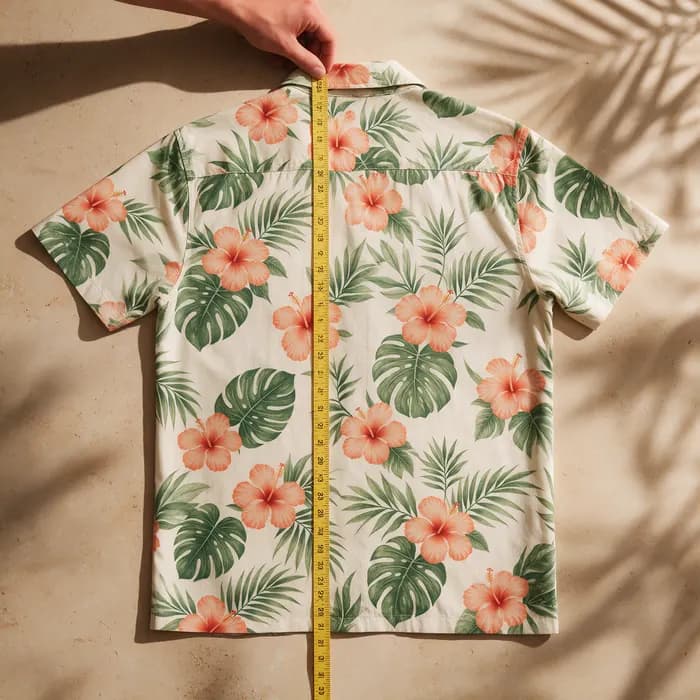
Lay a shirt that fits you flat. Measure the garment itself and compare both its width and length with the chart.
Men's measurements
Compare the numbers
The flat chest and length columns describe the garment. Switch units without changing the underlying measurements.
| Size | Chest (in) | Length (in) | Fits chest (in) |
|---|---|---|---|
| S | 20 | 28 | 36–38 |
| M | 21.5 | 29 | 39–41 |
| L | 23 | 30 | 42–44 |
| XL | 24.5 | 31 | 45–47 |
| 2XL | 26 | 32 | 48–50 |
| 3XL | 27.5 | 33 | 51–53 |
| 4XL | 29 | 34 | 54–56 |
| 5XL | 30.5 | 35 | 57–59 |
| 6XL | 32 | 36 | 60–62 |
Swipe for length
Measure across the chest
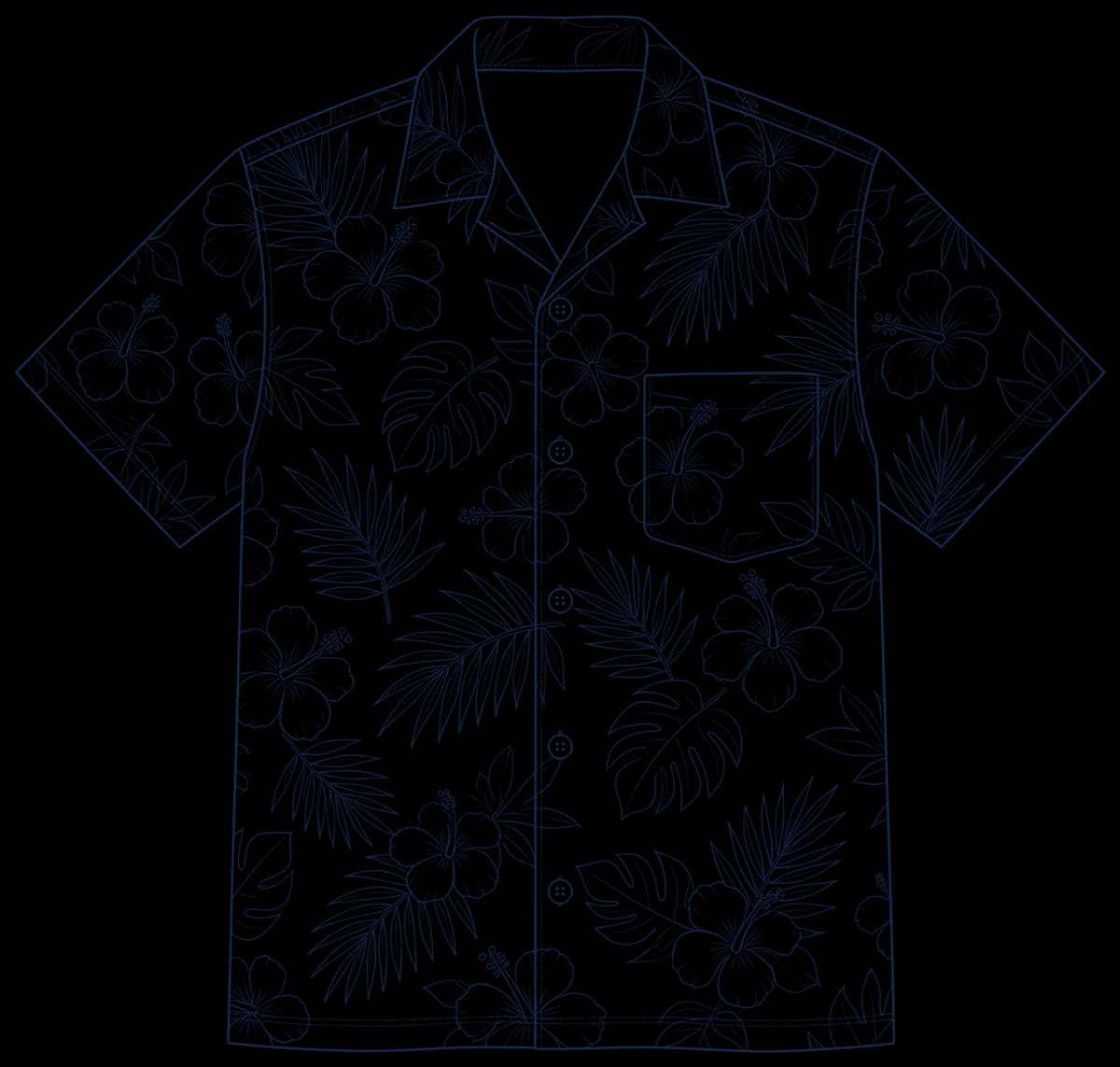
Smooth the shirt on a flat surface without stretching it. Measure in a straight line from one armpit seam to the other. The chest column in this chart is that flat width, not a measurement around the body.
Measure the length
Measure from the top of the shoulder beside the collar down to the bottom hem. Check the length against the shirt you laid out. A width that looks right can still leave you with a length you do not prefer.
If you are between two sizes
Compare both rows with the shirt you already wear comfortably. Look at the width and length together, then decide which difference matters more for that wearer. If it is a gift, asking for a flat shirt measurement is more reliable than guessing from a letter size.
Keep exploring
A little more before you go.